
Bharat Rising: The Civilizational Thread That’s Rewriting the Playbook
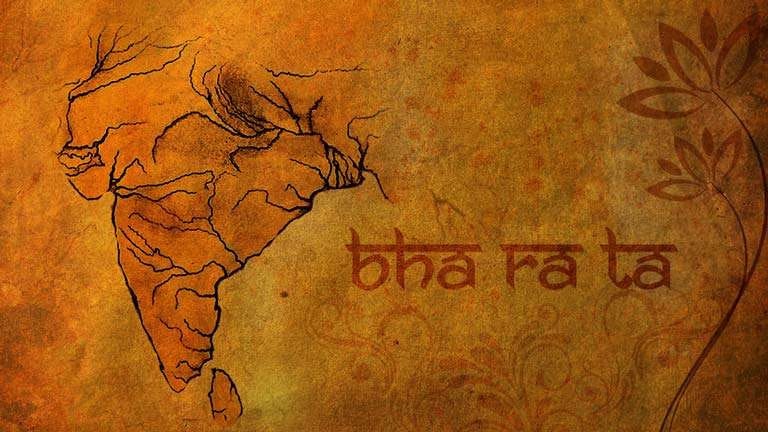
When we say “India is rising,” we usually point to GDP curves, satellite launches, or defense exports. Useful — but incomplete. The deeper truth is civilizational: a many-millennia memory rediscovering its voice, updating its operating system without deleting the original code. That is what really unsettles the status quo. A power that does not imitate, but remembers — and then innovates — changes the grammar of global order.
The Civilizational Thread
1) Memory as Strategy, Not Sentiment
Civilizations endure because they remember. India’s civilizational memory — carried in texts and practices, in festivals and crafts, in languages and law — did not dissolve under invasion, colonization, or partition. It reorganized. This is less nostalgia than strategy: the ability to retain first principles while changing form.
- Continuity: From śruti/smṛti (revealed/remembered) traditions to classical grammars, from temple geometry to village water management, the Indian mind learned to encode knowledge into repeatable patterns — rituals, pedagogy, crafts — so it could be ported across time.
- Adaptive resilience: Bhakti democratized access to the sacred; Sikh and later reform movements re-armed ethics with duty and courage; the freedom movement fused ancient idioms with modern constitutional aspirations. Each “update” preserved a core: meaning arises from responsibility, not compulsion.
This memory confers a unique advantage in a volatile century: change without metaphysical panic. You can alter the tool without losing the purpose.
2) Plurality as the Default Setting
India’s civilizational stance is not uniformity but plurality — an ecosystem where multiple metaphysics, dialects, cuisines, and art forms co-evolve. Plurality here is not mere tolerance; it is an engine of creativity. When difference is normalized, complexity becomes workable, not terrifying.
- Social operating system: Sarva-dharma-sambhāva (equal regard), panchayat traditions, neighborhood shrines and mosques, monastery-market symbiosis — these are not anomalies but infrastructure for living with variety.
- Innovation dividend: When your baseline is heterogeneity, you build systems that scale through interoperability rather than central coercion. That instinct shows up today in India’s digital public goods and modular policy design.
Plurality, then, is not a weakness to be managed but a source of antifragility.
3) Dharma: Responsibility Before Rights
At the ethical core is dharma — not a sectarian label, but a civilizational grammar of responsibility: aligning personal action to a larger order (ṛta), balancing desire with duty, liberty with consequence.
- Personal dharma: Self-authorship tempered by accountability.
- Institutional dharma: Power is legitimate only when it serves a larger balance — hence the cultural suspicion of unchecked centralization, and the respect for layered authority (family, guild, village, state).
- Strategic dharma: Choose alignment not from fear but from fit; pursue strength without severing restraint.
Dharma isn’t antiquarian. It’s a decision heuristic in messy environments: act so systems remain livable.
4) Knowledge Traditions: From Metaphysics to Methods
India’s civilizational libraries did not shun method. Logic (Nyāya), linguistics (Pāṇini’s generative grammar), medicine (Āyurveda’s systems thinking), astronomy, aesthetics (Rasa theory) — these were structured inquiry frameworks. They fused curiosity with humility: knowledge is provisional, reality layered.
This habit of mind — structured openness — reappears today in engineering culture, frugal innovation, and the willingness to pilot, learn, and iterate at population scale.
5) Statecraft by Calibration
From the Arthashastra to maritime trade with many worlds, the civilizational instinct has been pragmatic calibration: align values, pursue interests, avoid needless enmity, diversify dependencies, keep optionality. Non-alignment was not indecision; it was sovereign bandwidth.
That sensibility is visible now in multi-vector diplomacy: collaborate, hedge, compete — but on one’s own terms.
6) Democracy as Civilizational Form, Not Western Import
India’s democracy is noisy because India is alive. Elections, courts, a fiercely argumentative public sphere — imperfect and indispensable — extend an older idea: order without erasure. The wager is that voice, however messy, makes systems more adaptive than enforced silence. When crisis arrives, plural polities bend; brittle ones break.
This is why India’s rise unnerves both paternalistic liberals and authoritarian centralizers: it disproves the narrative that freedom must be traded for scale.
7) Meaning as a Factor of Production
Most models price capital, labor, land, and technology. India adds a fifth factor: meaning. A society that can convert daily work into service (seva), commerce into contribution, and ambition into responsibility compounds not just output but cohesion. Meaning lowers the social cost of modernization.
How the Thread Shows Up Today
Defense Innovation: Sovereignty as a Design Goal
The defense story is not only procurement; it’s production of sovereignty.
- Make-at-home platforms: Indigenous aircraft, warships, artillery, missiles. The technical arc matters, but the deeper move is capability confidence — you can field, fix, and evolve what you fight with.
- Open innovation: Challenges and grants drawing startups into EW, autonomy, ISR, propulsion. A decentralized innovation lattice mirrors the civilizational preference for modular ecosystems over monoliths.
- Doctrine shift: From “buyer” to “builder,” from platform accumulation to architecture thinking (sensors-to-shooters, man-unmanned teaming, space + cyber fused with land/sea/air).
This unnerves the region because it removes the old assumption of Indian dependence and inserts an actor capable of shaping timelines, not merely reacting to them.
Space Technology: Frugality, Precision, Ambition
India’s space program expresses three civilizational habits: purpose discipline, frugal ingenuity, patient ambition.
- Purpose discipline: Space for public goods — tele-education, weather, agriculture — alongside deep-space exploration.
- Frugal ingenuity: Do more with constrained budgets, optimize for reliability, reuse, and modularity.
- Patient ambition: From lunar poles to solar probes to a growing private launch and EO ecosystem — ambition that stays grounded in service.
Space is not just prestige; it’s a systems layer for civilian welfare and strategic awareness — the dharmic fusion of aspiration with responsibility.
Deep Tech + Digital Public Infrastructure: Plurality at Internet Scale
India’s digital rails — identity, payments, data exchange — are public goods first, market catalysts second. That ordering matters.
- Interoperability by default: Competing wallets on a common rail; rival sellers on an open commerce network; health and education stacks built to plug-and-play.
- Trust architecture: Consent frameworks and verifiable credentials turn privacy from slogan to implementable protocol.
- Deep-tech bets: Semiconductors, quantum, AI, biotech — pursued not as vanity projects but as strategic depth to keep sovereignty in a world of chokepoints.
This is civilizational plurality reimagined for the 21st century: many actors, one rail; many models, one grammar.
Resources & Commodities: From Price-Taker to System Shaper
The shift is subtle but structural: diversify energy sources, build resilient supply chains for critical minerals, expand storage and refining capacity, and invest in renewables at scale. The principle is old — balance — but the application is new: hedge shocks, reduce single-point dependencies, and negotiate from strength.
Here, too, dharma translates as stewardship: growth with an eye on stability — of grids, prices, and ecosystems.
Why This Disturbs the Status Quo
- The Mental Map Fails
India no longer fits the “peripheral, dependent, imitator” slot. When the map mislabels the terrain, navigators feel threat. The anxiety is uncertainty, not enmity. - The Model Collapses
Authoritarian efficiency as the only route to scale? Western paternalism as the sole script for modernity? India’s messy-but-working pluralism disproves both. That is a philosophical and political shock. - The Story Breaks
Power is not only resources; it is the authority to define the story. For two centuries, others wrote the story of progress. India’s rise asserts that there are other grammars of success — rooted, plural, democratic, technologically ambitious. - The Board Tilts
A sovereign India that can choose partners by domain — defense with X, energy with Y, tech with Z — raises the transaction costs of coercion and lowers the returns on zero-sum blocs. The most powerful actor isn’t always the one with the biggest stack, but the one who forces everyone else to recalculate.
Principles of India’s New-Age Growth (Drawn from the Civilizational Thread)
- Continuity > Copying: Upgrade without cultural erasure.
- Plurality > Monoculture: Build rails that many can run on.
- Responsibility > Raw Power: Strength restrained by purpose scales longer.
- Frugality > Flash: Efficiency as elegance, not austerity.
- Optionality > Orthodoxy: Keep doors open; avoid brittle dependence.
- Meaning > Mere Output: Cohesion and morale are multipliers, not afterthoughts.
These are not slogans; they are design constraints. Systems that honor them become robust under stress.
The Personal Mirror
Nations and individuals share the same psychology. We cling to hierarchies and stories because they spare us the labor of growth. India’s rise is a mirror asking: Will you adapt before you shatter? Will you trade borrowed scripts for authored purpose? Will you accept that complexity, engaged with integrity, produces resilience?
A civilization is not a museum. It is a living method. India’s method — remember deeply, adapt calmly, build plural systems, align power with responsibility — is showing that modernity need not be a severance from self. It can be an unfolding.
Conclusion: A Different Kind of Power
India terrifies some not because it threatens to dominate, but because it refuses to be dominated — by imported models, by brittle binaries, by the fear of its own plurality. Defense labs and launch pads, payment rails and mineral strategies — these are surface waves. The deep current is civilizational: strength with memory, freedom with responsibility, plurality with purpose.
That current is carving a new channel through the global order. The old house will need its walls moved, its doors widened. Those who mistake reconstruction for ruin will resist until they crack. Those who understand that endurance requires redesign will adapt and flourish.
India is not just rising. A civilization is updating itself in real time — and, in doing so, is rewriting how success is defined in the twenty-first century.


